Food provides the energy your body needs to survive, move, grow, repair tissues, regulate body temperature, and perform countless chemical processes every day. Yet the language used to describe food energy can be confusing. Nutrition labels commonly use the word calories, scientists often discuss kilocalories, and nutrition textbooks may describe food in terms of energy.
Although these terms are closely related, they are not technically identical.
Table of Contents
Understanding the difference between calories, kilocalories, and energy in food can make nutrition labels much easier to understand. It can also help explain why foods have different energy values, how the body obtains energy from carbohydrates, proteins, fats, and alcohol, and why consuming more or less energy than your body uses can influence body weight over time.
This comprehensive guide explains what calories and kilocalories mean, how food energy is measured, how the body converts nutrients into usable energy, how to read calorie information on food labels, and why calories are only one part of a healthy diet.
What Is Energy in Food?
In nutrition, energy refers to the capacity provided by food that the body can use to perform biological work.
Your body is constantly using energy. Even when you are sleeping or sitting still, energy is required to keep your heart beating, maintain breathing, circulate blood, regulate body temperature, support brain activity, maintain cells and tissues, produce hormones and enzymes, repair tissues, and power countless cellular processes.
Food supplies the chemical energy required for these processes.
The energy stored in food originates primarily from the chemical bonds within nutrients. During digestion, food is broken down into smaller molecules that can be absorbed and processed by the body.
Carbohydrates are generally broken down into glucose and other simple sugars. Proteins are broken down into amino acids, while fats are broken down into fatty acids and other components.
The body can use these molecules through metabolic pathways to produce adenosine triphosphate (ATP), a molecule that plays a central role in cellular energy transfer.
Therefore, when nutritionists talk about the energy in food, they are describing the amount of chemical energy that can potentially be made available to the body.
What Is a Calorie?
A calorie is a unit of energy.
The small calorie, written as cal, was historically defined in relation to heat. It represents a small amount of energy.
However, the calorie used in scientific contexts is not the same size as the calorie commonly discussed in nutrition.
This is one of the main reasons people become confused about calories and kilocalories.
In everyday nutrition, the word calorie almost always refers to a kilocalorie.
For example:
1 food Calorie = 1 kilocalorie = 1,000 small calories
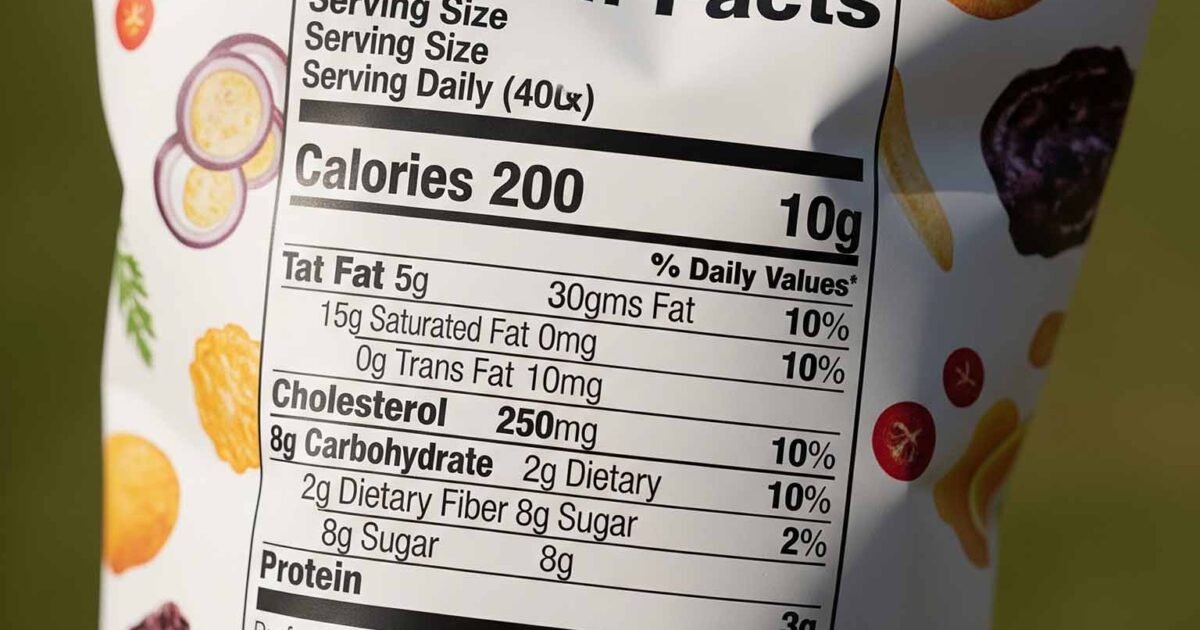
Therefore, when a food label says that a serving contains 200 Calories, it normally means approximately 200 kilocalories, not 200 small calories.
What Is a Kilocalorie?
A kilocalorie (kcal) is equal to 1,000 small calories.
The relationship can be expressed as:
1 kcal = 1,000 cal
Kilocalories are widely used in nutrition because they provide a convenient way to describe the amount of energy in food.
If nutrition labels used small calories instead of kilocalories, the numbers would become unnecessarily large. A meal containing 600 kilocalories would contain 600,000 small calories.
Using kilocalories makes nutrition information much easier to communicate.
Calories vs. Kilocalories
| Term | Meaning |
|---|---|
| Calorie (cal) | A small unit of energy |
| Kilocalorie (kcal) | 1,000 small calories |
| Food Calorie | Usually one kilocalorie |
| Energy | The capacity to perform work |
| Kilojoule (kJ) | Another unit used to measure energy |
The most important relationship to remember is:
1 kcal = 1,000 cal
And in nutrition:
1 food Calorie = 1 kcal
Therefore, if someone says they ate 500 calories, they normally mean they consumed approximately 500 kilocalories.
Why Do Nutrition Labels Use Calories?
Nutrition labels are designed to provide consumers with practical information about food.
Depending on the country, food labels may display energy using kilocalories, kilojoules, or both.
A label might say:
Energy: 840 kJ / 200 kcal
This does not mean the food contains 840 calories plus another 200 calories. Both numbers represent the same amount of energy using two different measurement systems.
Calories are familiar to consumers, while kilojoules are widely used internationally and are part of the International System of Units.
What Is a Kilojoule?
A kilojoule (kJ) is another unit used to measure energy.
Nutrition labels in many countries use kilojoules to describe the energy content of foods and beverages.
The approximate conversion is:
1 kcal = 4.184 kJ
Conversely:
1 kJ = approximately 0.239 kcal
To convert kilocalories to kilojoules:
kJ = kcal × 4.184
To convert kilojoules to kilocalories:
kcal = kJ ÷ 4.184
Calories and Kilojoules: An Example
Suppose a food contains 100 kcal.
Using the conversion:
100 × 4.184 = 418.4 kJ
Therefore:
100 kcal ≈ 418 kJ
Similarly, a food containing 1,000 kJ provides approximately:
1,000 ÷ 4.184 = 239 kcal
Therefore:
1,000 kJ ≈ 239 kcal
Where Does Food Energy Come From?
Most dietary energy comes from four major energy-yielding components:
- Carbohydrates
- Protein
- Fat
- Alcohol
Vitamins and minerals are essential nutrients, but they do not provide calories in the conventional sense.
Water also contains no calories.
The traditional energy values for the major energy-yielding nutrients are approximately:
| Nutrient | Energy per gram |
|---|---|
| Carbohydrate | 4 kcal |
| Protein | 4 kcal |
| Fat | 9 kcal |
| Alcohol | 7 kcal |
Calories From Carbohydrates
Carbohydrates provide approximately 4 kcal per gram.
Carbohydrates include sugars, starches, and various forms of dietary fiber.
Common carbohydrate-containing foods include rice, bread, potatoes, pasta, maize, oats, fruits, beans, cereals, and many processed foods.
During digestion, many digestible carbohydrates are broken down into glucose and other simple sugars.
Glucose can enter the bloodstream and be transported to cells, where it can be used through metabolic pathways to produce energy.
However, not all carbohydrate-containing foods have the same nutritional value.
Whole grains, legumes, fruits, and vegetables can provide carbohydrates alongside fiber, vitamins, minerals, and other beneficial compounds.
Calories From Protein
Protein provides approximately 4 kcal per gram.
Protein is particularly important because it has many functions beyond providing energy.
The body uses protein to build and repair tissues, maintain muscle, produce enzymes and hormones, support immune function, transport substances, and maintain cellular structures.
Proteins are made up of amino acids.
During digestion, dietary proteins are broken down into amino acids and smaller peptides that can be absorbed and used by the body.
Protein can also be used as an energy source, particularly when energy requirements and dietary conditions make this necessary.
Calories From Fat
Fat provides approximately 9 kcal per gram.
This makes fat more energy-dense than carbohydrates and protein.
For example:
10 grams of fat × 9 kcal = approximately 90 kcal
Fat performs many important functions in the body.
- Provides energy
- Helps absorb fat-soluble vitamins
- Forms part of cell membranes
- Provides essential fatty acids
- Helps protect organs
- Provides insulation
- Supports numerous biological processes
Different types of dietary fat can have different effects on health, so the quality and source of fat are important in addition to its calorie content.
Calories From Alcohol
Alcohol provides approximately 7 kcal per gram.
This makes alcohol more energy-dense than carbohydrates and protein but less energy-dense than fat.
Alcoholic beverages may also contain calories from sugar, fruit juice, syrups, mixers, and other ingredients.
Consequently, the total energy content of an alcoholic beverage can be considerably higher than the energy provided by alcohol alone.
Why Does Fat Have More Calories Per Gram?
Fat is more energy-dense because of its chemical structure and the amount of chemical energy that can be released when it is metabolized.
This explains why fat provides approximately 9 kcal per gram, while carbohydrates and protein provide approximately 4 kcal per gram.
As a result, foods containing large amounts of fat can provide substantial amounts of energy in relatively small portions.
What Is Energy Density?
Energy density describes how much energy a food provides relative to its weight.
It is commonly expressed as kilocalories per gram.
High-energy-density foods provide relatively large amounts of energy in small amounts of food.
Examples can include:
- Cooking oils
- Butter
- Some nuts and nut butters
- Some confectionery products
- Fat-rich processed foods
Foods with lower energy density often contain more water and/or fiber.
Examples can include many vegetables, fruits, leafy greens, and broth-based foods.
How Water Affects Food Energy Density
Water contains no calories, but it can greatly increase the weight and volume of food.
This is why foods with high water content can have relatively low calories per 100 grams.
Fresh fruit, for example, contains a substantial amount of water. When fruit is dried, much of the water is removed and the energy becomes concentrated into a smaller weight of food.
This does not mean drying creates calories. Instead, removing water increases the concentration of existing nutrients and energy.
How Does the Body Get Energy From Food?
The body cannot simply use a calorie number printed on a food package. Food must first be digested, absorbed, transported, and metabolized.
Digestion
Digestion begins in the mouth and continues throughout the gastrointestinal tract.
Mechanical digestion breaks food into smaller pieces, while digestive enzymes and other substances break nutrients into smaller molecules.
Absorption
After digestion, many nutrients are absorbed through the intestinal wall.
Carbohydrates can be broken down into simple sugars. Proteins can be broken down into amino acids and smaller peptides. Fats can be broken down into fatty acids and other lipid components.
Transportation
Once absorbed, nutrients are transported through the bloodstream or lymphatic system to tissues throughout the body.
Cellular Metabolism
Cells process nutrients through complex metabolic pathways.
Energy released during these reactions can be captured in molecules such as ATP.
What Is ATP?
Adenosine triphosphate, or ATP, is an important molecule involved in cellular energy transfer.
ATP is not a unit of energy like the calorie. Instead, it is a molecule that can transfer chemical energy within cells.
ATP is involved in many processes, including:
- Muscle contraction
- Active transport
- Cellular signaling
- Chemical synthesis
- Movement of substances within cells
The body continually produces and uses ATP.
How Is Food Energy Measured?
Food energy can be measured experimentally using specialized equipment.
One traditional method uses an instrument known as a bomb calorimeter.
A food sample is placed in a sealed chamber and burned in the presence of oxygen. The heat produced is measured and used to estimate the food’s energy content.
However, the human body does not absorb every bit of energy released when food is completely burned.
Some energy is lost through feces, urine, and other processes.
For this reason, nutritional energy values are based on estimates of energy that is available to the body rather than simply the total heat produced during complete combustion.
The Atwater System
The Atwater system is commonly used to estimate the energy content of foods.
The traditional general factors are:
- Carbohydrate: 4 kcal per gram
- Protein: 4 kcal per gram
- Fat: 9 kcal per gram
- Alcohol: 7 kcal per gram
These factors allow food energy to be estimated from the amounts of energy-yielding nutrients present in a food.
Actual energy availability can vary depending on the food, its composition, digestibility, processing, and other factors.
Why Calories on Food Labels Are Estimates
A calorie number printed on a food label should not be interpreted as an absolutely precise measurement of the energy that every person will absorb.
Energy availability can be influenced by:
- Food composition
- Fiber content
- Digestibility
- Cooking
- Food processing
- Preparation methods
- Individual differences
- Portion-size measurement
Therefore, food labels provide useful standardized estimates rather than a perfect measurement of exactly how much energy your body will extract from every bite.

Understanding Calories Per Serving
Nutrition labels usually provide calorie information based on a specific serving size.
For example, suppose a cereal label states:
Serving size: 40 g
Energy: 150 kcal
If you consume 80 grams, you have consumed two servings.
Therefore:
150 kcal × 2 = 300 kcal
This is why it is important to check both the serving size and the number of servings in a package.
Calories Per 100 Grams
Some food labels provide energy values per 100 grams.
This can make it easier to compare different foods.
| Food | Energy per 100 g |
|---|---|
| Food A | 100 kcal |
| Food B | 200 kcal |
| Food C | 400 kcal |
Food C has four times the energy density of Food A.
However, this does not automatically mean Food A is healthier. Nutritional quality depends on many other factors.
Calories and Portion Size
The amount of food you consume has a major influence on your total energy intake.
Imagine that a food contains 200 kcal per 100 grams.
Eating 100 grams provides approximately 200 kcal.
Eating 250 grams provides approximately 500 kcal.
This illustrates why both energy density and portion size are important when considering calorie intake.
What Is a Calorie Deficit?
A calorie deficit occurs when energy intake is lower than energy expenditure over a period of time.
When the body does not receive enough energy from food and beverages to meet its energy demands, it can draw upon stored energy.
Stored energy can come from glycogen and body fat, among other sources. Under some circumstances, other tissues may also be broken down.
Over time, sustained energy deficits can contribute to weight loss.
What Is a Calorie Surplus?
A calorie surplus occurs when energy intake exceeds energy expenditure over time.
When the body receives more energy than it needs for immediate use, some of that energy can be stored.
Body fat is an important long-term form of energy storage.
A sustained energy surplus can contribute to increases in body weight and body fat, although individual responses can vary.
What Is Energy Balance?
Energy balance describes the relationship between energy consumed and energy expended.
A simplified representation is:
Energy balance = Energy intake − Energy expenditure
Energy intake comes primarily from food and beverages.
Energy expenditure includes several components:
- Basal or resting energy expenditure
- Physical activity
- Thermic effect of food
- Other physiological processes
Energy requirements are not identical for everyone.
They can be influenced by body size, age, sex, activity level, muscle mass, growth, pregnancy, breastfeeding, environmental conditions, health status, and other physiological factors.
What Is Basal Metabolic Rate?
Basal metabolic rate (BMR) refers to the energy required to support essential physiological processes under highly controlled resting conditions.
Your body needs energy even when you are not exercising.
Energy is required for:
- Breathing
- Blood circulation
- Brain activity
- Cellular maintenance
- Temperature regulation
- Organ function
BMR represents a significant part of daily energy expenditure, but it is not the same thing as total daily calorie needs.
Resting Energy Expenditure
Resting energy expenditure (REE) is closely related to basal metabolic rate and is commonly used in practical nutritional and research settings.
Both concepts demonstrate that your body uses energy continuously, even when you are physically inactive.
Physical Activity and Calorie Expenditure
Physical activity increases energy expenditure.
Examples include:
- Walking
- Running
- Cycling
- Swimming
- Resistance training
- Dancing
- Gardening
- Household activities
- Sports
- Occupational activity
The amount of energy used during physical activity varies according to body size, activity type, intensity, duration, fitness, movement efficiency, and other factors.
The Thermic Effect of Food
The body also uses energy to process the food you eat.
Digestion, absorption, transportation, and metabolism all require energy.
This is commonly referred to as the thermic effect of food (TEF).
Different macronutrients have different thermic effects. Protein generally requires more energy to process than carbohydrates or fat.
Why 2,000 Calories Is Not a Universal Requirement
You may see 2,000 calories per day used as a reference value on nutrition information.
This does not mean that every adult needs exactly 2,000 calories every day.
Energy requirements vary considerably from person to person.
A highly active individual may need substantially more energy than a sedentary individual. Children have different requirements because they are growing, while pregnancy and breastfeeding can change energy needs.
Therefore, a 2,000-calorie reference value should not automatically be treated as an individual’s personal calorie requirement.
Calories and Body Weight
Energy balance plays an important role in changes in body weight, but body-weight regulation is more complex than a simple calories-in-versus-calories-out formula.
Energy intake and energy expenditure can influence one another.
Changes in body weight can affect the amount of energy required to move and maintain the body. Dietary changes can also affect appetite, activity, hormones, and other physiological processes.
This means that individual responses to changes in calorie intake can vary.
Why Counting Calories Can Be Useful
Calorie tracking can be useful for some people because it provides an estimate of how much energy they are consuming.
It can help someone understand:
- Portion sizes
- Energy density
- Food composition
- Eating patterns
- How different foods contribute to total energy intake
However, calorie counting is not necessary for everyone.
A nutritious dietary pattern should also consider protein, fiber, vitamins, minerals, healthy fats, fruits, vegetables, whole grains, hydration, and overall food quality.
Calories Are Not the Same as Nutritional Quality
Consider two hypothetical meals.
Meal A
Meal A provides 500 kcal but contains relatively little protein, fiber, vitamins, and minerals.
Meal B
Meal B also provides 500 kcal but contains protein, fiber, vitamins, minerals, healthy fats, and complex carbohydrates.
Both meals contain approximately the same amount of energy, but their nutritional profiles are very different.
This illustrates an important principle:
Calories describe energy, not complete nutritional quality.
Calories and Macronutrients: A Simple Calculation
Suppose a food contains:
- 20 grams of carbohydrate
- 10 grams of protein
- 5 grams of fat
Using the traditional energy factors:
Carbohydrate: 20 × 4 = 80 kcal
Protein: 10 × 4 = 40 kcal
Fat: 5 × 9 = 45 kcal
Total:
80 + 40 + 45 = 165 kcal
Therefore, the food would provide approximately 165 kcal based on these simplified energy factors.
A Second Calorie Calculation Example
Imagine a meal containing:
- 60 grams of carbohydrate
- 25 grams of protein
- 15 grams of fat
Energy from carbohydrate:
60 × 4 = 240 kcal
Energy from protein:
25 × 4 = 100 kcal
Energy from fat:
15 × 9 = 135 kcal
Total:
240 + 100 + 135 = 475 kcal
Therefore, the meal provides approximately 475 kcal using the traditional general energy factors.
Does Cooking Change Calories?
Cooking can affect the energy content of food per unit of weight, particularly because cooking can change water content and digestibility.
For example, grains absorb water during cooking. This increases their weight without adding significant calories from the water itself.
As a result, cooked grains can contain fewer calories per 100 grams than their dry counterparts.
The original energy has not simply disappeared. Much of the difference is explained by the added water.
Cooking can also alter the physical structure of foods and make some nutrients easier to digest.
Does Freezing Food Change Its Calories?
Freezing generally does not significantly alter the intrinsic energy content of most foods.
However, preparation methods can change calorie content.
For example, adding oil, butter, sugar, cream, or sauces can substantially increase the energy content of a food.
Does Drying Food Increase Calories?
Drying removes water from food.
Because water contains no calories, removing water concentrates the existing energy and nutrients into a smaller weight of food.
This is why dried fruit can contain considerably more calories per 100 grams than fresh fruit.
Drying does not create energy. It simply reduces the amount of water in the food.
Does Adding Oil Increase Calories?
Yes.
Cooking oils are highly energy-dense because they are primarily fat.
Fat provides approximately 9 kcal per gram.
Consequently, even relatively small quantities of oil can add significant energy to a meal.
This is why cooking methods should be considered when estimating the energy content of meals.
Do Drinks Contain Calories?
Yes. Many beverages contain significant amounts of energy.
Examples include:
- Soft drinks
- Sweetened tea
- Sweetened coffee
- Fruit drinks
- Smoothies
- Milk-based beverages
- Energy drinks
- Alcoholic beverages
Water contains no calories.
Plain tea and plain coffee generally contain very little energy, although adding sugar, milk, cream, or other ingredients can increase their calorie content.
Calories and Exercise
Exercise uses energy, although the exact amount varies considerably.
Energy expenditure during physical activity depends on factors such as body size, exercise intensity, duration, activity type, fitness level, and movement efficiency.
Examples of activities that use energy include walking, running, cycling, swimming, resistance training, dancing, and sports.
Calorie estimates provided by fitness trackers, exercise machines, and online calculators should generally be treated as estimates rather than exact measurements.
Why Exercise Does More Than Burn Calories
Physical activity has benefits that go far beyond calorie expenditure.
Regular physical activity can support:
- Cardiovascular health
- Muscle strength
- Bone health
- Physical fitness
- Mobility
- Metabolic health
- Psychological well-being
For this reason, exercise should not be viewed only as a method of burning calories from food.
Can You Eat Too Few Calories?
Yes.
The body needs enough energy and nutrients to maintain normal physiological functions.
Consistently consuming insufficient energy can make it difficult to meet nutritional needs.
Severe or prolonged energy restriction can be associated with fatigue, reduced physical performance, nutrient deficiencies, loss of lean tissue, hormonal disturbances, impaired immune function, and other health problems.
There is no single minimum calorie intake that is appropriate for every person.
Can You Consume Too Many Calories?
Yes.
Consistently consuming more energy than the body uses can contribute to increased energy storage and weight gain over time.
However, calorie intake alone does not determine overall health.
Food quality, physical activity, sleep, genetics, medications, health conditions, and overall dietary patterns can also influence health and body weight.
Calories and Nutrient Density
Nutrient density describes the amount of useful nutrients a food provides relative to its energy content.
Nutrient-dense foods can provide vitamins, minerals, protein, fiber, healthy fats, and other beneficial components.
Examples include many:
- Vegetables
- Fruits
- Legumes
- Whole grains
- Nuts and seeds
- Fish
- Eggs
- Dairy foods
Energy density and nutrient density are related concepts, but they are not the same thing.
Calories and Satiety
Satiety refers to the feeling of fullness or satisfaction after eating.
Different foods can influence satiety differently.
Factors that can affect satiety include:
- Protein content
- Fiber content
- Food volume
- Water content
- Fat content
- Texture
- Eating speed
- Individual preferences
A meal containing vegetables, legumes, whole grains, and protein may be more filling than a small portion of a highly processed snack containing a similar amount of calories.
Common Misunderstandings About Calories
Are calories and kilocalories completely different?
No. A kilocalorie is 1,000 small calories. In nutrition, the word calorie normally refers to a kilocalorie.
Does a food with more calories automatically mean it is unhealthy?
No. Some nutritious foods, including nuts, seeds, oils, and certain whole foods, can be relatively energy-dense while providing important nutrients.
Are all calories nutritionally identical?
No. While calories represent the same unit of energy, the foods supplying those calories can have very different nutritional compositions and physiological effects.
Do you only burn calories when exercising?
No. The body uses energy continuously to maintain essential functions such as breathing, circulation, brain activity, and cellular maintenance.
Do calories only matter for weight loss?
No. Energy is required for all physiological processes, and energy balance is relevant to maintaining body weight as well as changes in body weight.
Are calorie numbers on food labels perfectly exact?
No. Food energy values are standardized estimates and actual energy availability can vary depending on the food and individual.
Frequently Asked Questions About Calories and Kilocalories
What is the difference between a calorie and a kilocalorie?
A calorie is a small unit of energy, while a kilocalorie equals 1,000 calories. In nutrition, the term calorie generally refers to a kilocalorie.
Is 1 kcal equal to 1,000 calories?
Yes. 1 kcal = 1,000 cal.
Is a food Calorie the same as a kilocalorie?
Yes. A nutritional Calorie, traditionally written with a capital C, is equivalent to one kilocalorie.
How many calories are in one gram of fat?
Fat provides approximately 9 kcal per gram.
How many calories are in one gram of carbohydrate?
Carbohydrate provides approximately 4 kcal per gram.
How many calories are in one gram of protein?
Protein provides approximately 4 kcal per gram.
How many calories are in one gram of alcohol?
Alcohol provides approximately 7 kcal per gram.
What is the difference between kcal and kJ?
Both are units of energy. One kilocalorie is approximately equal to 4.184 kilojoules.
How do I convert kcal to kJ?
Multiply the number of kilocalories by 4.184.
Example: 200 kcal × 4.184 = 836.8 kJ
How do I convert kJ to kcal?
Divide the number of kilojoules by 4.184.
Example: 1,000 kJ ÷ 4.184 ≈ 239 kcal
Do vitamins contain calories?
Vitamins do not provide calories in the same way that carbohydrates, proteins, fats, and alcohol do. They are required in small amounts for many biological functions.
Do minerals contain calories?
No. Minerals are essential nutrients but do not provide dietary calories.
Does water contain calories?
Plain water contains no calories.
Why does fat have more calories than carbohydrates?
Fat provides approximately 9 kcal per gram, whereas carbohydrates provide approximately 4 kcal per gram. This difference is related to their chemical structures and energy content.
Is 2,000 calories the amount everyone should consume?
No. Individual energy requirements vary based on factors such as body size, age, sex, physical activity, growth, pregnancy, breastfeeding, and other physiological factors.
Can eating too many calories cause weight gain?
Consistently consuming more energy than the body uses can contribute to increased energy storage and weight gain over time.
Can eating too few calories be harmful?
Yes. Prolonged inadequate energy intake can make it difficult to meet the body’s energy and nutrient requirements and may negatively affect health.
Are calories the only thing that matters in a healthy diet?
No. Nutrient quality, dietary variety, protein, fiber, vitamins, minerals, fats, carbohydrates, hydration, and overall eating patterns are also important.
A Simple Way to Remember the Difference
The relationship between these concepts can be summarized simply:
- Energy: the capacity to perform work.
- Calorie: a unit used to measure energy.
- Kilocalorie: 1,000 small calories.
- Food Calorie: normally one kilocalorie.
- Kilojoule: another unit used to measure energy.
The key conversions are:
- 1 kcal = 1,000 cal
- 1 kcal = 4.184 kJ
- 1 kJ ≈ 0.239 kcal
For nutrition, the most important practical point is that when someone says a food contains 300 calories, they almost always mean approximately 300 kilocalories.
The Bigger Picture: Energy Is Only One Part of Nutrition
Understanding calories and kilocalories is an important part of learning about nutrition, but nutrition involves much more than energy.
The human body requires a wide range of nutrients and dietary components, including:
- Carbohydrates
- Proteins
- Fats
- Vitamins
- Minerals
- Water
- Fiber
Food also contains thousands of naturally occurring compounds that can interact with the body.
A healthy dietary pattern is therefore not simply a matter of choosing foods with the lowest possible calorie numbers.
Instead, it is important to consider how foods provide energy, nutrients, fiber, vitamins, minerals, and other beneficial components.
Conclusion
Calories, kilocalories, and energy are closely connected concepts, but understanding their differences makes nutrition information much easier to interpret.
Energy is the capacity to perform work, while food contains chemical energy that the body can extract through digestion and metabolism.
A calorie is a unit of energy, while a kilocalorie equals 1,000 small calories. In everyday nutrition, the word calorie almost always refers to a kilocalorie.
Carbohydrates and proteins provide approximately 4 kcal per gram, fat provides approximately 9 kcal per gram, and alcohol provides approximately 7 kcal per gram.
Food energy can also be expressed in kilojoules, with 1 kcal equivalent to approximately 4.184 kJ.
Calories are important because the body needs energy to maintain life, support physical activity, grow, repair tissues, and carry out countless cellular processes. However, calorie content does not describe the complete nutritional value of a food.
Two foods can contain the same number of calories while providing very different amounts of protein, fiber, vitamins, minerals, and other beneficial components.
Learning to distinguish energy, calories, kilocalories, and kilojoules provides an important foundation for understanding nutrition labels and making sense of dietary information.
The most useful approach is to consider calories alongside food quality, nutrient density, portion size, dietary variety, physical activity, and individual nutritional needs.
Recommended Sources
- U.S. Food and Drug Administration (FDA) — Calories on the Nutrition Facts Label
Explains what calories represent, how calories are listed on food labels, serving sizes, and the 2,000-calorie general reference. (U.S. Food and Drug Administration)
FDA: Calories on the Nutrition Facts Label - USDA FoodData Central — Frequently Asked Questions
Particularly useful for the article’s discussion of food energy and the Atwater factors. USDA explains that energy values are commonly calculated using 4 kcal/g for protein, 9 kcal/g for fat, and 4 kcal/g for carbohydrates. (FoodData Central)
USDA FoodData Central FAQ - USDA FoodData Central — Foundation Foods Documentation
Provides additional technical information about how food energy is calculated using general and specific Atwater factors. (FoodData Central)
USDA FoodData Central Foundation Foods Documentation - Food and Agriculture Organization of the United Nations (FAO) — Dietary Energy
Explains why the human body requires dietary energy for bodily functions, physical activity, maintaining body temperature, tissue repair and growth. (FAOHome)
FAO: Dietary Energy - FAO — Food Energy: Methods of Analysis and Conversion Factors
A particularly valuable technical source for the sections covering food energy, kilocalories, kilojoules and Atwater factors. (FAOHome)
FAO: Food Energy — Methods of Analysis and Conversion Factors - FAO — Food Composition Data
Discusses the use of Atwater factors in calculating energy from protein, fat, carbohydrates and other components of food. (FAOHome)
FAO: Food Composition Data - FDA — How to Understand and Use the Nutrition Facts Label
Useful for the article’s sections on calories per serving, serving sizes, energy balance and the 2,000-calorie reference value. (U.S. Food and Drug Administration)
FDA: How to Understand and Use the Nutrition Facts Label - FDA — What’s on the Nutrition Facts Label
Supports information about serving sizes, calories and Percent Daily Value (%DV). (U.S. Food and Drug Administration)
FDA: What’s on the Nutrition Facts Label

1 Comment