
Have you ever wondered why some foods give you energy, why your body needs vitamins and minerals, or why eating a balanced diet is important for your health? The answers to these questions lie in nutrition.

Nutrition is one of the foundations of human health. Every day, the foods and drinks we consume provide the energy and nutrients our bodies need to grow, repair tissues, fight infections, maintain organs, and perform everyday activities.
Table of Contents
However, nutrition involves much more than simply eating food. It is about understanding what food contains, how the body processes it, and how different dietary choices influence physical health, development, and overall well-being.
What Is Nutrition?
Nutrition is the science of how the body obtains, digests, absorbs, transports, and uses nutrients from food and beverages to support life, growth, development, and health.

In simple terms, nutrition is about how food nourishes the body.
The foods we eat contain different substances, including carbohydrates, proteins, fats, vitamins, minerals, and water. These substances are known as nutrients, and each has specific functions within the body.
Some nutrients provide energy, while others help build muscles, maintain bones, regulate body processes, and support the immune system.
Nutrition also includes the study of dietary habits, food availability, food safety, and how individual and environmental factors influence what people eat.
A person’s nutritional needs may depend on:
- Age and stage of life.
- Physical activity and daily energy expenditure.
- Pregnancy or breastfeeding.
- Health conditions and medications.
- Cultural food practices and personal preferences.
- Access to safe, affordable, and nutritious food.
This means there is no single diet that is perfect for everyone. A healthy eating pattern should meet an individual’s nutritional requirements while taking their circumstances, preferences, and available foods into account.
Why Is Nutrition Important for the Human Body?
The human body is a complex system made up of cells, tissues, organs, and organ systems. Each part requires energy and nutrients to perform its functions.
1. Provides Energy for Daily Activities
Your body needs energy to perform both physical activities and processes that happen automatically, such as breathing, circulating blood, and maintaining body temperature.
Food provides this energy in the form of calories, which measure the energy available from what we eat and drink.
Carbohydrates and fats are major sources of energy, while protein can also provide energy when needed.
2. Supports Growth and Development
Nutrition is particularly important during infancy, childhood, adolescence, and pregnancy. During these stages, the body undergoes rapid growth and development, requiring sufficient energy, protein, vitamins, and minerals.
Protein supports the formation of new tissues, calcium contributes to bone development, and iron is necessary for producing haemoglobin, the protein that carries oxygen in red blood cells.
3. Repairs and Maintains Body Tissues
The body constantly replaces and repairs cells. Protein provides amino acids used to build and repair tissues, while vitamins and minerals participate in processes involved in wound healing, cell growth, and tissue maintenance.
4. Supports the Immune System
The immune system protects the body against harmful microorganisms and other threats. Several nutrients, including protein, zinc, iron, vitamin A, vitamin C, and vitamin D, contribute to normal immune function.
5. Helps Maintain Healthy Bones and Teeth
Calcium and phosphorus contribute to bone structure, while vitamin D supports calcium absorption and bone health. Protein, magnesium, and vitamin K also contribute to normal skeletal functions.
6. Helps Reduce the Risk of Diet-Related Diseases
A diet rich in vegetables, fruits, whole grains, legumes, nuts, and other nutrient-dense foods is associated with better health outcomes.
Conversely, diets consistently high in excess salt, free sugars, and unhealthy fats can contribute to health risks, including cardiovascular disease and other noncommunicable diseases.
What Are Nutrients?
Nutrients are substances found in food and beverages that the body uses for energy, growth, maintenance, and normal functioning.
They are generally divided into macronutrients and micronutrients.
Macronutrients
Macronutrients are nutrients the body requires in relatively large amounts. They include:
- Carbohydrates.
- Proteins.
- Fats.
Micronutrients
Micronutrients are nutrients required in smaller amounts, usually measured in milligrams or micrograms. They include vitamins and minerals.
Water is also essential for life and supports hydration, circulation, temperature regulation, digestion, and the transport of substances throughout the body.
The Six Essential Nutrients Your Body Needs
Understanding the six essential nutrients is one of the most important steps in learning about nutrition. Each nutrient performs different functions, and no single nutrient can replace all the others.
1. Carbohydrates: The Body’s Main Energy Source
Carbohydrates are one of the body’s primary sources of energy. They are found in foods such as rice, maize, potatoes, bread, oats, fruits, and legumes.
When you eat carbohydrate-containing foods, your digestive system breaks down digestible carbohydrates into simpler sugars, including glucose.
Types of Carbohydrates
- Simple carbohydrates: These include sugars made up of one or two sugar units. Examples include glucose, fructose, and sucrose.
- Complex carbohydrates: These include starches found in maize, rice, cassava, potatoes, and whole grains.
- Dietary fibre: Fibre is a type of carbohydrate that the human digestive system cannot fully digest. It is found in vegetables, fruits, legumes, nuts, seeds, and whole grains.
Healthy Sources of Carbohydrates
- Whole grains such as oats, brown rice, and whole-wheat bread.
- Maize, millet, sorghum, and other grains.
- Beans, lentils, and peas.
- Fruits such as bananas, oranges, and mangoes.
- Starchy vegetables such as potatoes and sweet potatoes.
2. Proteins: The Building Blocks of the Body
Protein is an essential nutrient required for growth, tissue repair, and the maintenance of muscles and other body structures.
Proteins are made up of smaller units called amino acids. When you consume protein-rich foods, digestion breaks the proteins down into amino acids and smaller peptides.
Functions of Protein
- Growth and tissue repair: Amino acids are used to build and repair muscles, skin, organs, and other tissues.
- Enzyme production: Many enzymes that control chemical reactions in the body are proteins.
- Hormone production: Some hormones, including insulin, are proteins or peptides.
- Immune function: Antibodies are proteins that help the immune system recognize and respond to specific threats.
- Transport: Certain proteins, such as haemoglobin, transport substances throughout the body.
Sources of Protein
| Animal sources | Plant sources |
|---|---|
| Eggs | Beans |
| Fish | Lentils |
| Chicken | Soybeans |
| Milk and yoghurt | Peas |
| Meat | Peanuts and other nuts |
3. Fats: Essential for Energy and Cell Health
Fats are an important source of energy and play several essential roles in the body.
They provide approximately 9 calories per gram, making them more energy-dense than carbohydrates and protein, which each provide approximately 4 calories per gram.
Functions of Dietary Fat
- Provide energy and help the body store energy.
- Form important parts of cell membranes.
- Help the body absorb vitamins A, D, E, and K.
- Supply essential fatty acids that the body cannot make in sufficient amounts.
- Support normal growth and other physiological processes.
Types of Dietary Fat
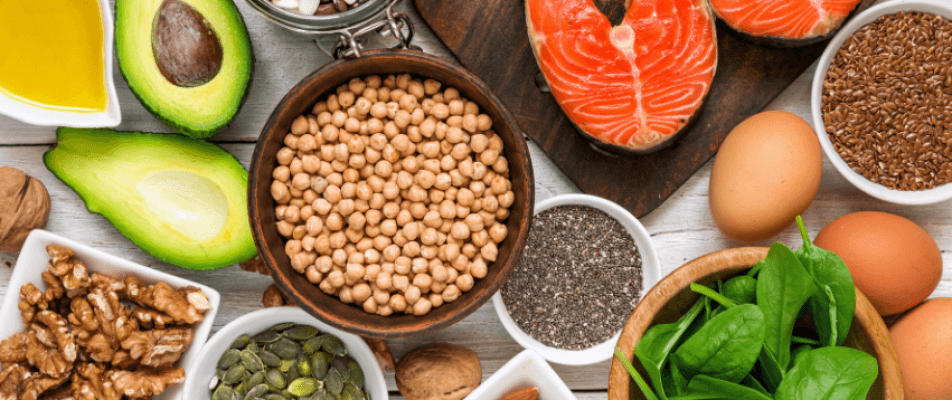
- Unsaturated fats: Generally found in avocados, nuts, seeds, fish, and many plant oils.
- Saturated fats: Found in foods such as butter, fatty meat, ghee, coconut oil, and palm oil.
- Trans fats: Industrially produced trans fats can occur in some partially hydrogenated oils and foods made with them. They are associated with increased cardiovascular risk and should be avoided.
Healthy Sources of Fat
- Avocados.
- Groundnuts and other nuts.
- Sesame and sunflower seeds.
- Fish such as sardines and salmon.
- Plant oils such as olive, sunflower, and soybean oil.
4. Vitamins: Essential Nutrients for Body Regulation
Vitamins are organic compounds that the body requires in small amounts to support normal growth, metabolism, immune function, and other physiological processes.
Types of Vitamins
| Fat-soluble vitamins | Water-soluble vitamins |
|---|---|
| Vitamin A | Vitamin C |
| Vitamin D | Vitamin B1 (thiamine) |
| Vitamin E | Vitamin B2 (riboflavin) |
| Vitamin K | Vitamin B3 (niacin) |
| Vitamin B5 (pantothenic acid) | |
| Vitamin B6 | |
| Vitamin B7 (biotin) | |
| Vitamin B9 (folate) | |
| Vitamin B12 |
Functions of Important Vitamins
- Vitamin A: Supports normal vision, immune function, and the maintenance of epithelial tissues.
- B vitamins: Support energy metabolism, nervous system function, and red blood cell production.
- Vitamin C: Supports collagen formation, wound healing, antioxidant activity, and the absorption of non-haem iron.
- Vitamin D: Helps regulate calcium and phosphorus absorption and supports bone health.
- Vitamin E: Functions as an antioxidant that helps protect cell membranes from oxidative damage.
- Vitamin K: Plays an important role in blood clotting and contributes to bone metabolism.
5. Minerals: Essential for Bones, Blood, and Body Functions
Minerals are inorganic elements that the body needs to maintain normal structure and physiological functions.
Major Minerals and Trace Minerals
Major minerals are needed in relatively larger amounts. They include calcium, phosphorus, magnesium, sodium, potassium, chloride, and sulfur.
Trace minerals are required in smaller quantities. Examples include iron, zinc, iodine, selenium, copper, and manganese.
Important Minerals and Their Functions
| Mineral | Main function | Common food sources |
|---|---|---|
| Calcium | Bone and teeth structure, muscle function | Milk, yoghurt, small fish eaten with bones |
| Iron | Haemoglobin and oxygen transport | Meat, beans, lentils, leafy greens |
| Zinc | Immune function, growth, wound healing | Meat, shellfish, beans, seeds |
| Iodine | Production of thyroid hormones | Iodized salt, seafood |
| Potassium | Fluid balance, nerve and muscle function | Bananas, beans, potatoes, vegetables |
| Magnesium | Muscle and nerve function, enzyme activity | Nuts, seeds, whole grains, legumes |
6. Water: The Often-Overlooked Essential Nutrient
Water is essential for nearly every system in the human body. It helps transport nutrients, remove waste products, regulate temperature, and maintain normal circulation.
Why Does the Body Need Water?
- Temperature regulation: Sweat helps cool the body when it evaporates from the skin.
- Nutrient transport: Water forms a major part of blood and other body fluids.
- Digestion: Water supports digestive processes and helps maintain normal stool consistency.
- Waste removal: The kidneys use water to produce urine and eliminate waste products.
- Joint and tissue support: Water contributes to lubrication and the maintenance of normal tissues.
How Much Water Should You Drink?
There is no single amount that is appropriate for every person. Water requirements depend on body size, physical activity, climate, health, pregnancy, and other factors.
People living in hot climates or performing strenuous physical activities may need more fluids because they lose additional water through sweating.
A practical approach is to drink regularly throughout the day and increase fluid intake when conditions or activities increase fluid loss.
How Does the Body Process Food?
For nutrients to benefit the body, they must be released from food, broken down when necessary, absorbed, and transported to cells. This process involves the digestive system and several other organs.
Step 1: Ingestion
Ingestion is the process of taking food and beverages into the mouth. Digestion begins when food is chewed and mixed with saliva.
Step 2: Digestion
Digestion is the mechanical and chemical breakdown of food into smaller substances that the body can absorb.
The stomach mixes food with gastric juices. Stomach acid helps create conditions for protein digestion, while enzymes such as pepsin begin breaking proteins into smaller fragments.
Most chemical digestion takes place in the small intestine, where digestive enzymes from the pancreas and substances from the liver and gallbladder help process carbohydrates, proteins, and fats.
Step 3: Absorption
Absorption is the movement of digested nutrients from the digestive tract into the bloodstream or lymphatic system.
Most nutrient absorption occurs in the small intestine, which contains tiny structures called villi and microvilli that increase the surface area available for absorption.
Step 4: Transportation and Utilization
Once absorbed, nutrients are transported to tissues and organs where they are used or stored.
- Glucose can be used to produce energy or stored as glycogen.
- Amino acids are used to build proteins.
- Fatty acids can be used for energy or incorporated into cell structures.
- Vitamins and minerals participate in numerous metabolic and structural functions.
Step 5: Excretion
Undigested material passes into the large intestine, where water and electrolytes are absorbed and intestinal microorganisms ferment some types of fibre.
The remaining waste is eventually eliminated through bowel movements. The kidneys also filter waste products from the blood and remove them through urine.
What Is a Balanced Diet?
A balanced diet is an eating pattern that provides the energy and nutrients the body needs in appropriate amounts to support health, growth, and normal functioning.
It includes a variety of foods from different food groups rather than relying heavily on one type of food.
1. Adequacy
Adequacy means consuming enough energy, protein, vitamins, minerals, and other essential nutrients to meet the body’s needs.
2. Balance
Balance means consuming different nutrients in appropriate proportions and matching energy intake with the body’s energy needs over time.
3. Moderation
Moderation means paying attention to the amounts and frequency of foods that are high in free sugars, salt, and unhealthy fats.
4. Diversity
Dietary diversity means eating different foods within and across food groups.
How to Build a Healthy Plate
A practical starting point is to include vegetables or fruits, a source of carbohydrates, a source of protein, and a moderate amount of healthy fat.
| Meal component | Examples |
|---|---|
| Vegetables | Spinach, cabbage, carrots, tomatoes, okra |
| Carbohydrates | Rice, ugali, potatoes, cassava, whole grains |
| Protein | Beans, fish, eggs, lentils, chicken |
| Healthy fats | Avocado, groundnuts, seeds, plant oils |
| Fluids | Clean drinking water |
Example of a Balanced Daily Menu
Breakfast
Whole-grain bread, boiled eggs, a banana, and water or unsweetened tea.
Lunch
Ugali, beans, cooked mchicha or other leafy vegetables, and a piece of fruit.
Dinner
Rice or sweet potatoes, sardines or another protein source, and mixed vegetables.
Optional Snack
Fresh fruit, groundnuts, or plain yoghurt, depending on hunger and individual needs.
This is an illustrative menu, not an individualized meal plan. Portions and food choices should be adapted to dietary needs, allergies, affordability, availability, and medical advice where necessary.
Healthy Eating Guidelines for Beginners
Eat More Fruits and Vegetables
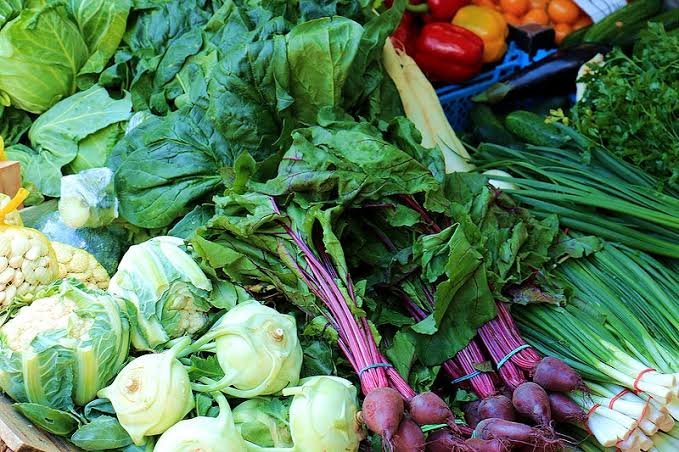
Fruits and vegetables provide vitamins, minerals, fibre, and other beneficial plant compounds.
The WHO recommends at least 400 grams of fruits and vegetables per day for adults and children older than 10 years, excluding certain starchy roots. Younger children have different recommendations.
Choose Whole Grains and Fibre-Rich Foods
Whole grains and legumes can provide fibre, vitamins, minerals, and energy. Where practical, choose foods such as oats, whole-wheat bread, millet, sorghum, brown rice, beans, and lentils.
Include Protein-Rich Foods
Include protein sources in your meals to support tissue maintenance, muscle function, and other physiological processes. Affordable options may include beans, peas, lentils, eggs, groundnuts, and locally available fish.
Limit Excess Salt and Added Sugars
The WHO recommends that adults consume less than 5 grams of salt per day, equivalent to approximately 2 grams of sodium, from all sources combined.
For free sugars, the general recommendation is to keep intake below 10% of total daily energy, with a further reduction to below 5% suggested for additional benefits.
Drink Enough Water
Make clean drinking water your regular beverage. Increase fluid intake during hot weather, exercise, or activities that cause substantial sweating.
Pay Attention to Food Safety
Wash produce appropriately, use clean water, cook foods thoroughly, store perishable foods at safe temperatures, and avoid cross-contamination between raw and cooked foods.
Make Healthy Eating Sustainable
Healthy eating is easier to maintain when it fits your lifestyle, budget, and food preferences. You do not need expensive supplements, imported foods, or specialty products to eat well.
What Happens When the Body Does Not Get Enough Nutrients?
When the body does not receive adequate energy or essential nutrients, nutritional problems can develop.
Undernutrition
Undernutrition occurs when the body does not receive or use enough energy or nutrients to meet its needs. It can result in low body weight, muscle wasting, impaired growth, or other complications.
Micronutrient Deficiencies
Micronutrient deficiencies occur when the body does not obtain or absorb enough of one or more vitamins or minerals.
- Iron deficiency, which can contribute to iron-deficiency anaemia.
- Vitamin A deficiency, which can affect vision and immune function.
- Vitamin D deficiency, which can impair bone health.
- Vitamin B12 deficiency, which can affect red blood cell production and nervous system function.
- Iodine deficiency, which can interfere with thyroid hormone production.
Overnutrition
Overnutrition refers to consuming excessive amounts of energy or certain nutrients relative to the body’s needs. It may contribute to overweight, obesity, or excessive intake of specific nutrients.
A person can consume too many calories while still having inadequate intake of particular vitamins or minerals.
Nutrition Myths Beginners Should Understand
Myth 1: All Carbohydrates Are Bad for You
Carbohydrates are essential sources of energy, and many carbohydrate-rich foods provide fibre, vitamins, and minerals. Whole grains, fruits, and legumes are important components of healthy eating patterns.
Myth 2: Eating Fat Always Causes Weight Gain
Dietary fat is essential for health. Weight changes are influenced by the balance between energy intake and energy expenditure over time, along with biological, behavioural, and environmental factors.
Myth 3: Supplements Can Replace a Healthy Diet
Supplements can be useful in certain situations, including diagnosed deficiencies or specific life stages. However, they do not replace the full range of nutrients, fibre, and beneficial food components provided by a varied diet.
Myth 4: A Healthy Diet Must Be Expensive
Nutritious food does not have to be expensive. Beans, seasonal vegetables, maize, millet, groundnuts, eggs, and locally available fruits can provide valuable nutrients.
Myth 5: Everyone Needs the Same Diet
Nutritional requirements vary with age, activity, pregnancy, health conditions, and other factors. A healthy diet should be appropriate for the individual rather than copied directly from another person’s meal plan.
Frequently Asked Questions About Nutrition
1. What is nutrition in simple words?
Nutrition is the process by which the body obtains and uses nutrients from food and drinks to produce energy, grow, repair tissues, and maintain health.
2. What are the six essential nutrients?
The six essential nutrient categories are carbohydrates, proteins, fats, vitamins, minerals, and water.
3. Why is nutrition important for health?
Nutrition provides energy, supports growth and tissue repair, helps maintain the immune system, and supports healthy bones, muscles, and organs.
4. What is the difference between macronutrients and micronutrients?
Macronutrients are needed in relatively large amounts and include carbohydrates, proteins, and fats. Micronutrients are required in smaller quantities and include vitamins and minerals.
5. What is the difference between nutrition and a diet?
Nutrition refers to how the body obtains and uses nutrients, as well as the science of food and its effects on health. A diet is the pattern of foods and beverages a person consumes over time.
6. What is the best food for good nutrition?
There is no single food that provides every nutrient in the amounts the body requires. A varied diet containing vegetables, fruits, whole grains, legumes, suitable protein sources, healthy fats, and water helps provide a wider range of essential nutrients.
7. How can beginners start eating healthier?
Start by making small, sustainable changes. Include vegetables in regular meals, eat different protein sources, choose fibre-rich foods, drink clean water, and reduce excessive salt and sugary drinks.
8. Can you be overweight and still malnourished?
Yes. A person can consume more calories than the body needs while not getting sufficient iron, vitamin D, vitamin B12, or other essential nutrients. Body weight alone does not reveal whether someone is meeting all their nutritional requirements.
Conclusion
Nutrition is the foundation of how the human body obtains energy, grows, repairs tissues, and maintains normal health. Understanding the relationship between food, nutrients, digestion, and the body’s requirements makes healthy eating easier to understand and apply.
The six essential nutrient categories—carbohydrates, proteins, fats, vitamins, minerals, and water—each perform different but interconnected functions. A balanced diet supplies these nutrients in appropriate amounts while supporting energy needs and overall well-being.
For beginners, the most important lesson is that healthy eating does not require perfection, expensive foods, or complicated dietary rules. It begins with eating a variety of nutritious foods, making informed choices, and developing habits that can be maintained throughout life.
As you continue learning about nutrition, explore individual nutrients, their functions, deficiency conditions, and the ways food processing and preparation influence nutritional quality.
References and Further Reading
- World Health Organization – Healthy Diet
- World Health Organization – Nutrition
- MedlinePlus – Nutrition
Medical disclaimer: This article is for educational purposes and is not a substitute for individualized medical or nutritional advice. People with medical conditions, suspected nutrient deficiencies, or special nutritional requirements should consult a qualified healthcare professional or registered dietitian.

2 Comments